
Adp vs quickbooks Payroll and cost
Adp vs Quickbooks Payroll Cost ADP vs. QuickBooks Payroll Cost: Complete 2026 Comparison | ADP Salary Calculator Payroll Software Comparison · Updated July 2026 ADP
Single with one job? This is the simplest tax form you’ll fill out all year — if you know which sections actually apply to you. Here’s exactly what to fill in and what to skip.
If you’re single and starting a new job — or just updating your withholding — the good news is that Form W-4 is often the simplest form you’ll fill out for that job. The bad news is that the form looks intimidating at first glance, with five numbered steps and several worksheets, which leads a lot of single filers to either overthink it or guess.
This guide walks through exactly which parts of the 2026 W-4 apply to a single filer, which parts you can safely skip, and how your answers translate into what actually comes out of your paycheck. For how those numbers show up on your actual check, see our guide to reading your ADP pay stub.
If you’re single, have exactly one job, have no dependents, and don’t itemize deductions or have significant outside income, you can fill out the W-4 in under two minutes:
Leaving Steps 2–4 blank tells your employer to withhold tax based only on the standard deduction and tax brackets for your filing status — which is exactly correct for a single filer with one job and no adjustments.
Everything after this section covers the situations where you’d need to fill in more than just Step 1 — multiple jobs, dependents, other income, or extra deductions.
Before filling out Step 1, it’s worth double-checking which filing status you actually qualify for, since “single” in everyday conversation and “Single” as an IRS filing status aren’t always the same thing.
| Filing Status | Who It’s For | 2026 Standard Deduction |
|---|---|---|
| Single | Unmarried, no qualifying dependent you support | $16,100 |
| Head of Household | Unmarried, pay more than half the cost of a home for a qualifying child or relative | $24,150 |
Here’s what each of the five steps means specifically from a single filer’s perspective:
Enter your legal name, address, and Social Security number exactly as they appear with the Social Security Administration. Select Single or Married filing separately as your filing status (or Head of Household, if that applies to you — see above).
As a single filer, this only applies if you personally hold more than one job at the same time. If you have just one job, skip this step. (Covered in detail below.)
Applies only if you financially support a qualifying child or relative. Most single filers with no dependents leave this blank. (Covered in detail below.)
Covers other income not from jobs, deductions beyond the standard deduction, and any extra flat-dollar amount you want withheld each pay period. Optional for most single filers with straightforward finances. (Covered in detail below.)
Your form isn’t valid until it’s signed. Your employer countersigns their portion.
This step exists because tax brackets are calculated on your total annual income — if you have two jobs and each employer withholds as if it’s your only income, you’ll likely be under-withheld overall. As a single filer, this applies if you:
If either applies, the IRS gives you three ways to account for it:
If you financially support a qualifying child or relative, Step 3 reduces how much is withheld from each paycheck to reflect tax credits you’ll claim at filing time.
Add 3(a) and 3(b) together and enter the combined total on the line below. A single parent with one qualifying child under 17, for example, would enter $2,200.
This step is entirely optional for most single filers, but three situations make it worth filling in:
If you have significant interest, dividend, or retirement income outside your paycheck, entering it here increases your withholding to cover the tax on that income, so you’re not surprised at tax time.
Only relevant if you plan to itemize deductions instead of taking the standard deduction, or if you qualify for above-the-line deductions like certain new temporary deductions for tips, overtime pay, or car loan interest. Most single filers taking the standard deduction can leave this blank.
A flat additional dollar amount withheld from every paycheck. This is useful if you have side income without its own withholding (like freelance work) and want to cover the extra tax gradually throughout the year instead of owing a lump sum in April.
Your employer’s payroll system automatically applies the standard deduction for your selected filing status when calculating withholding — you don’t enter it anywhere on the W-4 yourself. But understanding it explains why leaving Steps 2–4 blank works correctly for most single filers.
| Filing Status | 2026 Standard Deduction |
|---|---|
| Single / Married Filing Separately | $16,100 |
| Head of Household | $24,150 |
| Married Filing Jointly | $32,200 |
Because the standard deduction is baked into the withholding tables tied to your filing status, a single filer who takes the standard deduction (rather than itemizing) generally doesn’t need to enter anything in Step 4(b) at all.
*Assuming they pay more than half the cost of keeping up the home for that child — confirm this qualification before selecting Head of Household.
Filling out the form correctly is only half the job — it’s worth confirming the result actually matches what you expect.
If you support a qualifying child or relative and pay more than half the household costs, check whether Head of Household applies before selecting your filing status — it changes both your standard deduction and your tax brackets.
Each employer only sees your income from that one job. Without Step 2, both employers withhold as if that job is your only income, which usually under-withholds your combined tax bill.
The redesigned W-4, in use since 2020, no longer has an allowances field. Filing status and dollar-amount entries replace the old allowance system entirely.
Side income with no tax withheld at the source can lead to an unexpected bill in April. Using Step 4(c) to add extra withholding from your regular paycheck, or making quarterly estimated tax payments, helps avoid that surprise.
You can submit an updated W-4 to your employer at any time during the year — you’re not limited to doing it only when starting a new job.
Estimate your take-home pay based on your filing status, income, and withholding choices with our free ADP Salary Calculator.
Try the Free Calculator →Adp vs Quickbooks Payroll Cost ADP vs. QuickBooks Payroll Cost: Complete 2026 Comparison | ADP Salary Calculator Payroll Software Comparison · Updated July 2026 ADP
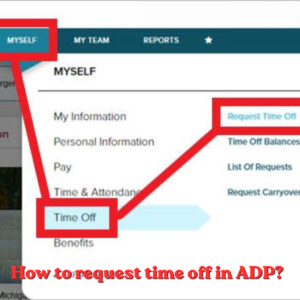
How to request time off in ADP? How to Request Time Off in ADP (Web & Mobile Guide) 2026 | ADP Salary Calculator Payroll &

What Is FICA Tax and Why Is It Taken From My Paycheck? What Is FICA Tax and Why Is It Taken From My Paycheck? (2026)

How to calculate overtime pay for taxes (With Examples) How to Calculate Overtime Pay for Taxes (With Examples) 2026 | ADP Salary Calculator Payroll Tax

ADP Direct Deposit: How to Set It Up and How Long It Takes ADP Direct Deposit: How to Set It Up and How Long It

How to Calculate Federal Unemployment Tax? How to Calculate Federal Unemployment Tax (FUTA) 2026 | ADP Salary Calculator Employer Payroll Guide · Updated June 2026

Estimate your net pay with this easy-to-use salary paycheck calculator.
Copyright © 2026. All Rights Reserved.