The shift toward SaaS (Software as a Service) HR management has transformed from a modern trend into a global standard. As of 2026, organizations are moving away from fragmented spreadsheets and rigid on-premise servers toward agile, cloud-based ecosystems.
This article explores the core benefits, essential features, and the emerging trends shaping the SaaS HR landscape today.
What is SaaS HR Management?
SaaS HR management refers to cloud-hosted software suites that handle the entire employee lifecycle—from recruitment and onboarding to payroll and performance reviews. Unlike traditional software, SaaS is accessed via a web browser or mobile app, with the vendor managing all security, updates, and server maintenance.
Key Classifications:
HRIS (Human Resource Information System): Focuses on data management and core HR tasks.
HRMS (Human Resource Management System): Includes HRIS features plus talent and performance management.
HCM (Human Capital Management): A broader strategic approach covering workforce planning and global compliance.
Core Benefits for Modern Businesses
1. Cost Efficiency & Scalability
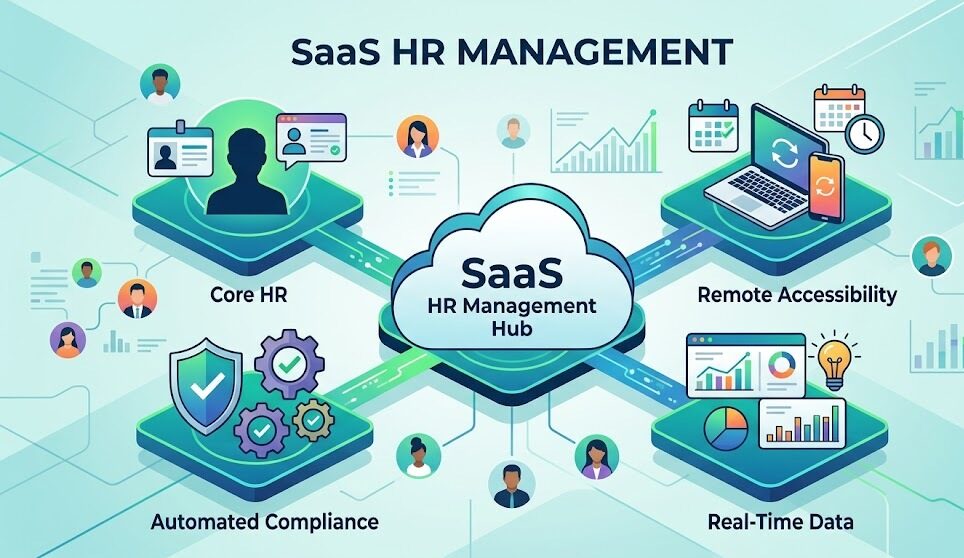
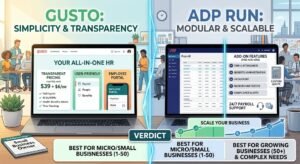
SaaS operates on a subscription model, eliminating the heavy upfront costs of hardware and permanent licenses. This makes enterprise-level tools accessible to SMEs. As a company grows, adding new users is as simple as updating a subscription plan.
2. Remote Accessibility
In a hybrid work world, accessibility is non-negotiable. Cloud-based HR tools allow employees to request leaves, view payslips, and complete training from anywhere, ensuring operational continuity for distributed teams.
3. Real-Time Data & Analytics
Modern platforms provide live dashboards that track turnover rates, diversity metrics, and performance trends. This shifts HR from a “reactive” administrative role to a “proactive” strategic partner powered by actionable insights.
4. Automated Compliance
SaaS providers automatically update their platforms to reflect changes in labor laws, tax regulations, and GDPR/data protection requirements. This significantly reduces the risk of human error in payroll and documentation.
Essential Features to Look For in 2026
To stay competitive, a SaaS HR platform should offer more than just a digital filing cabinet. Key features now include:
Employee Self-Service (ESS): Portals where staff manage their own personal data, benefits, and time-off requests.
Integrated Payroll: Seamless synchronization between attendance tracking and salary processing to eliminate manual data entry.
AI-Powered Recruitment: Tools that use machine learning to rank candidates based on skills rather than just resumes.
Mobile-First Design: Full functionality on smartphones, essential for field workers and “on-the-go” managers.
2026 Trends: The Future of HR Tech
Agentic AI: We are seeing a move beyond simple chatbots. AI “agents” can now autonomously handle complex workflows, like coordinating a multi-stage interview schedule or flagging potential burnout based on engagement patterns.
Skills-Based Infrastructure: Platforms are shifting focus from job titles to “skills taxonomies,” helping companies identify internal talent for new projects based on verified competencies.
Personalized Employee Experiences: Using data to tailor benefits, learning paths, and feedback cadences to the individual employee’s work style and career goals.
Conclusion:
Adopting a SaaS HR management system is no longer just about saving time—it’s about building a resilient, data-driven organization. By centralizing employee data in the cloud, businesses can foster a more transparent, efficient, and engaging workplace that is ready for the future of work.
Frequently Asked Questions: SaaS HR Management?
1. What is the main difference between SaaS HR and traditional HR software?
Traditional HR software usually requires on-premise installation and manual updates. SaaS HR is hosted in the cloud, meaning you access it via a browser, and the provider handles all maintenance, security, and updates automatically.
2. How secure is employee data in a SaaS environment?
Top-tier providers use bank-level encryption, multi-factor authentication (MFA), and comply with global standards like GDPR or SOC2. In many cases, cloud storage is more secure than local servers because of dedicated 24/7 security monitoring.
3. Is SaaS HR suitable for small businesses?
Yes. Because it operates on a subscription (Pay-As-You-Go) model, small businesses can access high-end tools without the massive upfront capital investment required for traditional software.
4. Can I integrate SaaS HR with my current accounting software?
Most modern platforms offer APIs (Application Programming Interfaces) that allow seamless integration with tools like QuickBooks, Xero, or Slack, ensuring your payroll and financial data stay synchronized.
5. What is “Employee Self-Service” (ESS)?
ESS is a feature that allows employees to manage their own tasks, such as updating personal info, viewing payslips, and requesting time off, without needing to contact an HR representative.
6. Does SaaS HR help with legal compliance?
Yes. Providers frequently update their software to reflect changes in labor laws, tax codes, and reporting requirements, which helps prevent costly legal errors.
7. How long does it take to implement a SaaS HR system?
While traditional systems could take months, SaaS implementation usually takes anywhere from a few days to a few weeks, depending on the size of your data migration.
8. Can I access the platform on my mobile phone?
Almost all modern SaaS HR solutions are mobile-responsive or have dedicated apps, allowing managers to approve requests and employees to check schedules on the go.
9. What happens to my data if I cancel the subscription?
Standard practice allows you to export your data (usually in CSV or Excel format) before closing your account. Always check the “Data Portability” clause in your contract.
10. How does SaaS HR improve the recruitment process?
It often includes an Applicant Tracking System (ATS) that automates job postings, parses resumes, and schedules interviews, making the hiring pipeline much faster.
11. Is training required for employees to use the system?
Most platforms are designed with a “consumer-grade” user interface, meaning they are intuitive enough to use with minimal training, though most vendors provide tutorials or “knowledge bases.”
12. Can it handle global teams with different currencies?
Yes, many “HCM” level SaaS platforms are built for global scale, supporting multiple languages, currencies, and local tax laws for international employees.
13. Does SaaS HR help with performance management?
Definitely. It replaces annual reviews with continuous feedback loops, goal tracking (OKRs), and automated reminders for 1-on-1 meetings.
14. What is the typical pricing structure?
Pricing is usually based on a PEPM (Per Employee Per Month) model or a flat monthly fee based on the number of features (modules) you choose to activate.
15. Can the software grow with my company?
Scalability is a core benefit. You can start with basic payroll and adding modules like “Learning Management” or “Succession Planning” as your organization expands.