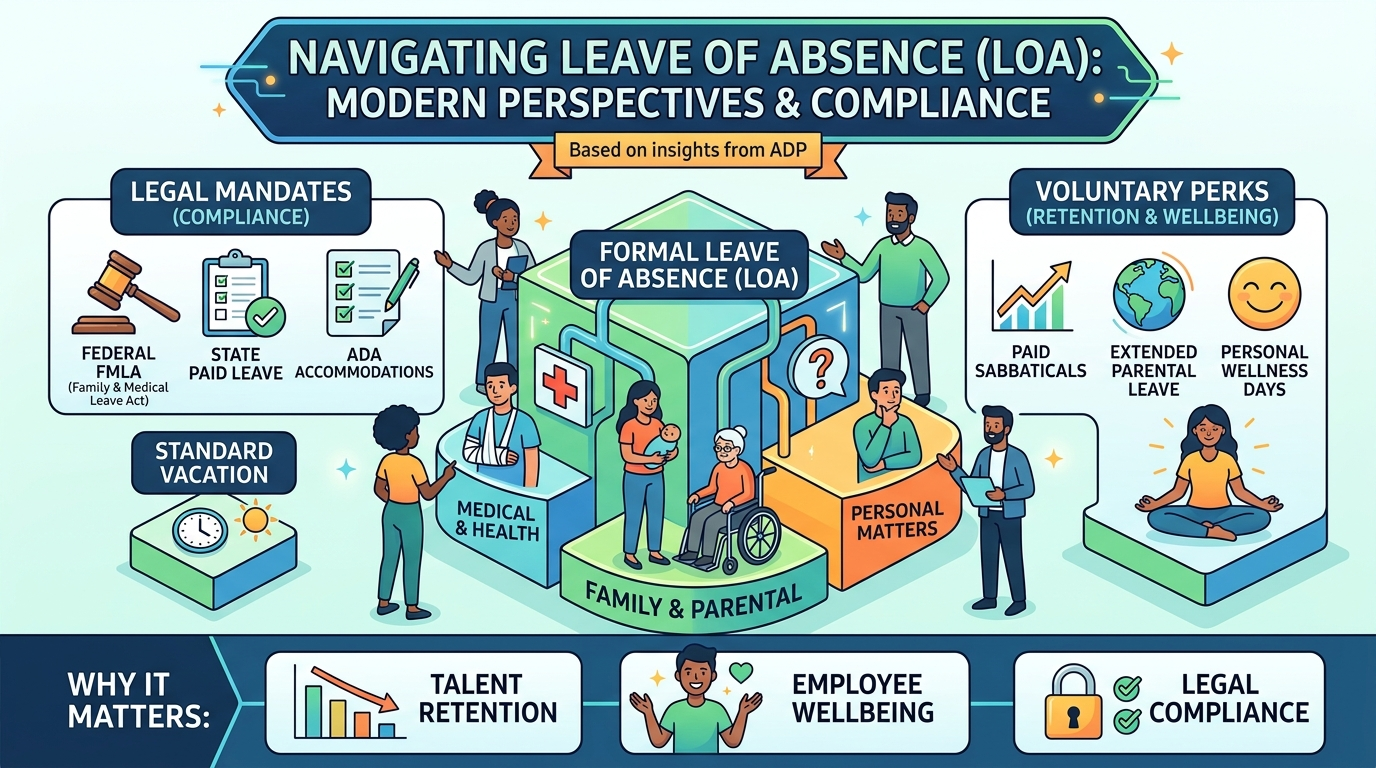
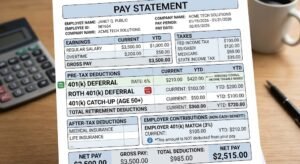
In the modern workplace, a “Leave of Absence” (LOA) is more than just time off it is a critical tool for talent retention, employee wellbeing, and legal compliance. While most managers are familiar with standard vacation days, a formal LOA often involves more complex personal, medical, or family matters that require an extended period away from work.
Drawing on insights from ADP, this article explores what employers need to know about managing leave, from legal mandates to voluntary perks.
What is a Leave of Absence?
A leave of absence is a period during which an employee is away from their job but remains employed by the company. Unlike standard Paid Time Off (PTO) or sick days, an LOA is often used for significant life events. These can be categorized into two main buckets: Mandatory Leave and Voluntary Leave.
1. Mandatory Leave: The Legal Requirements
Mandatory leave is governed by federal and state laws. Failing to comply with these regulations can lead to significant legal penalties and a decrease in workforce morale.
The Family and Medical Leave Act (FMLA): This is the cornerstone of leave legislation in the U.S. It allows eligible employees to take up to 12 workweeks of unpaid, job-protected leave per year for reasons such as the birth of a child, serious health conditions, or caring for an immediate family member.
The Americans with Disabilities Act (ADA): While the FMLA has specific eligibility requirements (such as company size and tenure), the ADA may require employers to provide leave as a “reasonable accommodation” for employees with disabilities, even if they don’t qualify for FMLA.
State and Local Laws: Many states have their own mandates that provide more generous benefits than federal law, such as paid family leave or specific protections for victims of domestic violence.
2. Voluntary Leave: The Competitive Edge
Voluntary leave is not required by law but is offered at the employer’s discretion. In a tight labor market, these policies serve as a powerful recruitment and engagement tool. Common examples include:
Sabbaticals: Extended breaks for long-tenured employees to recharge.
Bereavement: Time to grieve the loss of a loved one (or, in some progressive policies, a pet).
Education Leave: Allowing employees to pursue higher degrees or certifications.
Personal Leave: Time off for “life upheavals,” such as a move or a divorce.
The Business Impact of LOA
While having an employee away for weeks might seem like a productivity hurdle, the long-term benefits often outweigh the short-term inconvenience:
Retention: Employees are more likely to stay with a company that supports them during a crisis.
Morale: A clear, compassionate leave policy builds trust.
Productivity: Employees returning from a necessary leave are often more focused and productive than those trying to “work through” a major personal crisis.
Best Practices for Employers
To manage leave effectively, ADP recommends the following strategies:
Document Everything: Ensure your leave policies are clearly defined in your employee handbook. Specify who is eligible, how to request leave, and what documentation (like medical certificates) is required.
Train Your Managers: Managers are usually the first point of contact. They must be educated on both company policy and federal regulations to ensure they handle requests consistently and legally.
Enhance Tracking: Avoid manual spreadsheets. Using automated HR software integrated with payroll ensures that leave balances are accurate and that the company remains compliant with FMLA tracking.
Communicate Frequently: Stay in touch with employees on leave. Clear communication regarding return-to-work expectations helps reduce anxiety for both the employee and the team.
Conclusion:
A Leave of Absence policy is a fundamental component of a healthy HR toolkit. By balancing the “must-haves” of legal compliance with the “nice-to-haves” of voluntary benefits, employers can create a supportive culture that values its most important asset: its people.
Frequently Asked Questions: Understanding Leave of Absence (LOA)
Navigating the complexities of employee leave can be challenging for both employers and staff. Based on standard HR practices and legal frameworks like the FMLA, here are the most common questions regarding LOA.
General LOA Questions
1. What is the difference between a Leave of Absence and PTO? Paid Time Off (PTO) is typically used for short-term rests, such as vacations or minor illnesses. A Leave of Absence (LOA) is generally a more formal, extended period away from work (often weeks or months) triggered by significant life events like a serious medical condition, military service, or the birth of a child.
2. Is an employer required to pay an employee during an LOA? Not necessarily. Federal law (FMLA) only mandates unpaid leave. However, many employers choose to offer paid leave as a benefit, or employees may use accrued vacation/sick time to receive a paycheck during their absence. Some states also have mandatory paid family leave insurance programs.
3. Can an employee be fired while on a Leave of Absence? If the leave is “job-protected” (such as under FMLA or ADA), an employer generally cannot terminate an employee because they took leave. However, an employee on LOA is not immune to company-wide layoffs or terminations based on performance issues that existed before the leave began.
Legal & Compliance Questions
4. Who is eligible for FMLA? Under federal law, an employee is eligible if they:
Have worked for the employer for at least 12 months.
Have worked at least 1,250 hours during the 12 months prior to the start of the leave.
Work at a location where the employer has at least 50 employees within a 75-mile radius.
5. What happens to employee benefits (like health insurance) during an LOA? Under FMLA, employers are required to maintain the employee’s health coverage under the same terms as if they had continued to work. The employee must continue to pay their share of the premiums. For voluntary/non-protected leaves, benefit continuation depends on the specific company policy.
6. Does an employer have to give the exact same job back? Under job-protected leave, the employer must restore the employee to their original position or an equivalent one with the same pay, benefits, and other employment terms.
Management & Process Questions
7. Can an employer ask for medical certification? Yes. For leaves related to health conditions (FMLA or ADA), employers can require certification from a healthcare provider to verify that a serious health condition exists. However, employers must be careful to follow privacy laws regarding the specific details of the diagnosis.
8. What is “Intermittent Leave”? Intermittent leave allows an employee to take leave in separate blocks of time or by reducing their weekly or daily work schedule due to a single qualifying reason (e.g., attending chemotherapy sessions once a week), rather than taking one continuous block of time off.
9. How much notice does an employee need to provide? If the need for leave is foreseeable (like a planned surgery or pregnancy), employees should generally provide at least 30 days’ notice. If the situation is an emergency, notice must be given as soon as practicable.
| Leave Type | Legal Requirement | Typically Paid? |
| FMLA | Mandatory (if eligible) | No (Unpaid) |
| Jury Duty | Mandatory (usually) | Varies by State |
| Military (USERRA) | Mandatory | No |
| Sabbatical | Voluntary | Often Yes |
| Bereavement | Voluntary/State-dependent | Often Yes (3-5 days) |
Read Also;
ADP to Announce Third Quarter Fiscal 2026