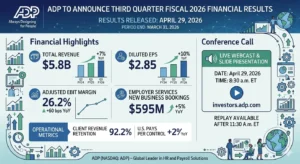
ADP to Announce Third Quarter Fiscal 2026
ADP to Announce Third Quarter Fiscal 2026 Adp paycheck Salary calculator ROSELAND, N.J. — March 28, 2026 — Automatic Data Processing, Inc. (Nasdaq: ADP), a

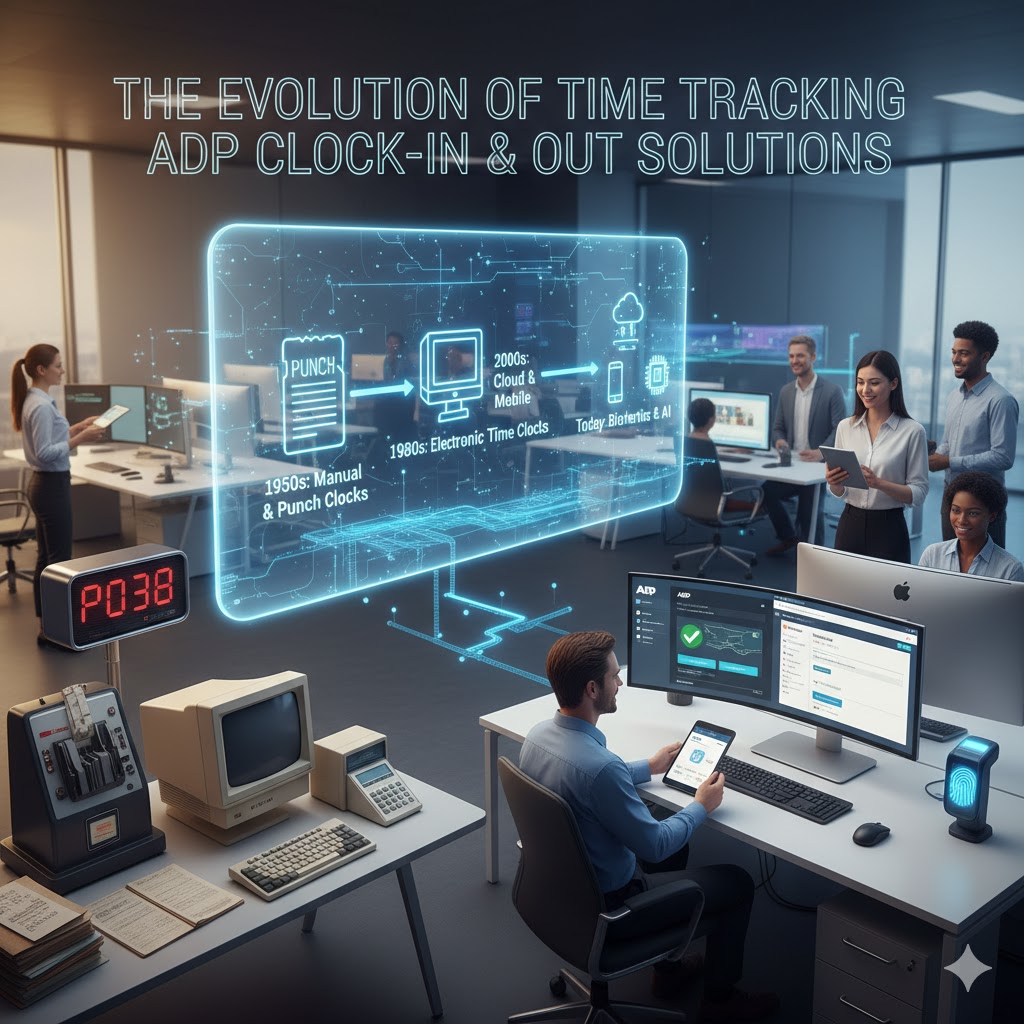
The simple act of “clocking in and out” is fundamental to daily business operations, yet for decades, it was a source of persistent administrative headache. Traditional methods, reliant on physical time cards, manual spreadsheets, or outdated punch clocks, introduced errors, invited time theft, and created a laborious process for payroll teams.
Today, leading Human Capital Management (HCM) providers like ADP have completely reimagined this process, turning the employee time clock into a sophisticated, integrated, and highly secure digital platform. ADP time and attendance solutions move beyond the basic concept of a time clock, evolving into a real-time data collection system designed to boost accuracy, ensure regulatory compliance, and deliver time directly into the payroll process.
ADP posits that the era of the traditional employee time clock is over. Modern workforces, characterized by flexibility and diverse operational needs, demand time collection methods that are equally flexible. The shift is driven by three critical needs:
Eliminating Tedious Data Entry: Paper timesheets or separate time-file imports create duplicate effort and introduce opportunities for error during transcription.
Ensuring Data Integrity: Manual processes can be easily manipulated or lead to inaccuracies, potentially resulting in costly payroll mistakes or compliance violations.
Achieving Seamless Integration: Time data should flow instantly and automatically to payroll and HR systems for accurate calculation of wages, overtime, and leave balances.
ADP suite of timekeeping solutions addresses these challenges head-on, offering a flexible system designed to evolve as the way people work continues to change.
ADP offers several cutting-edge methods for employees to clock in and out, catering to different work environments, from manufacturing floors and retail locations to remote setups. These methods are unified by their seamless connection to the overarching ADP payroll solution.
The ADP Kiosk is a purpose-built, mounted hardware device designed specifically to run and support ADP time and attendance solutions.
Always-On Reliability: It is permanently connected to power, ensuring it’s always operational and ready for use.
Dedicated Performance: Since it’s built specifically for ADP products, businesses benefit from dedicated support and guaranteed compatibility, minimizing maintenance issues.
Offline Capability: A critical feature for environments with intermittent connectivity, the ADP Kiosk can operate offline, allowing employees to log their hours even when an internet connection is unavailable. The data then syncs once connectivity is restored.
For organizations seeking flexibility without dedicated hardware investment, the ADP Time Kiosk App is an ideal solution.
Tablet Flexibility: The app is downloaded onto a shared tablet, offering the flexibility to use a device of the company’s choice (compatible with both iPad and Android platforms).
Familiar Experience: It turns a shared commercial tablet into a timekeeping device, providing the user experience of a traditional time clock but with the benefits of a modern, low-maintenance application.
Voice Commands: On iOS devices, the app offers the optional capability for employees to use voice commands to execute clocking actions, enhancing accessibility and speed.
Recognizing the rise of the remote and mobile workforce, ADP also integrates clock-in and out functionality into its ADP Mobile Solutions. This allows employees to perform on-the-go clocking actions directly from their personal or company-provided mobile devices.

ADP timekeeping devices are founded on three core principles that deliver superior value over traditional methods.
The most significant benefit of ADP digital timekeeping is the profound improvement in accuracy.
Real-Time Tracking: Timekeeping solutions track employee data in real time. This covers not only clocking in and out for work, but also logging breaks, meals, and even transferring time between specific jobs, departments, or locations.
Direct Payroll Integration: The collected time information is instantaneously sent directly to the employer’s ADP payroll management system. This direct connection eliminates the need to manually import time files or perform duplicate data entry, dramatically reducing errors and speeding up the payroll process.
Time theft, often referred to as “buddy punching” (where one employee clocks in for another), is a persistent problem that increases labor costs. ADP addresses this with enhanced identification measures, primarily through biometric authentication.
Biometric Authentication: Available on both the ADP Kiosk and the ADP Time Kiosk app, this technology uses unique body traits to confirm identity.
Facial Recognition with Liveness Detection: This advanced feature scans multiple angles of the face to ensure the person clocking in is physically present and not using a photograph or digital image.
Fingerprint Scanner: An optional biometric login method is available for additional security.
By requiring employees to use their unique biometric data, ADP timekeeping helps ensure that every punch is legitimate, improving data integrity and reducing payroll costs associated with inaccurate punches.
For managers, the last thing needed is a system that requires constant attention. ADP aims to provide reliable time collection that operators “won’t have to think twice about.”
ADP-Backed Support: Being built specifically to run ADP solutions means users can rely on integrated support, removing worries about third-party compatibility issues or complex maintenance.
Guaranteed Availability: The built-in offline functionality of the ADP Kiosk ensures that even during network outages, employees can still log their hours, ensuring seamless data capture regardless of internet conditions.
The functionality of ADP clock-in and out systems extends beyond a simple time stamp. They are tools for labor management and compliance:
To ensure employees are where they are supposed to be when they clock in, ADP timekeeping solutions offer location tracking. This feature allows employers to:
Set up rules that require employees to clock in only from certain physical areas (e.g., within a building’s perimeter).
Use IP address verification for employees clocking in from a computer or tablet.
By tracking time in real time and automatically integrating with a core HR and payroll system, ADP solutions simplify complex wage and hour compliance. The system automatically captures the necessary data points (clock-in time, clock-out time, break duration, etc.) needed to comply with local, state, and federal regulations, drastically reducing the risk of errors and fines.
Q: What are the main ways employees can clock in and out with ADP? Employees can use (1) physical ADP biometric kiosks, (2) the ADP Time Kiosk app on shared tablets, (3) the ADP Mobile app on their personal smartphones, or (4) web clocking from any browser.
Q: Does the system work offline? Both the physical kiosk and tablet app store punches locally and sync automatically once internet is restored, ensuring zero data loss during outages.
Q: How does ADP prevent buddy punching? Biometric verification (facial recognition with liveness detection or fingerprint scanning) ensures only the actual employee can clock in/out. Photos, videos, and masks are rejected.
Q: Can I restrict where employees clock in from? Absolutely. Geofencing and IP restrictions let you define approved clock-in zones (office, job site radius, home address, etc.). Punches outside those zones are blocked or flagged.
Q: Do employees need to download a separate app? For mobile clocking, they use the standard ADP Mobile app (already used by millions for pay stubs, PTO requests, etc.). No extra downloads required.
Q: Is the facial recognition privacy-compliant? ADP stores only encrypted mathematical templates (not actual photos) and is compliant with GDPR, CCPA, and other major privacy regulations.
Q: Can employees transfer time to different departments or jobs during a shift? At any kiosk, tablet, or mobile device, they can transfer time to another cost center, project, or task code with a couple of taps.
Q: How long does implementation take? Most small-to-mid-size businesses are fully live within 1–4 weeks. Hardware kiosks ship pre-configured, and the tablet/mobile options can be rolled out in hours.
Q: Does it integrate with scheduling software? Native integrations exist with ADP Workforce Now, RUN Powered by ADP, and popular third-party tools (When I Work, Deputy, etc.) via API.
Q: What if we already use another timekeeping system? ADP offers data migration services and can often run in parallel during transition to ensure zero payroll disruption.
Q: Is there a minimum number of employees required? Solutions scale from 5 employees to 50,000+ and are available through both ADP RUN (small business) and Workforce Now (mid-market/enterprise).
Q: How much does it cost? Pricing is usage-based and bundled with your ADP payroll/HR package. Contact ADP directly for a custom quote tailored to your employee count and feature needs.
The transformation of the traditional time clock into a secure, integrated, and flexible digital system is a critical component of modern workforce management. ADP suite of clock-in and out solutions the dedicated ADP Kiosk, the flexible ADP Time Kiosk App, and the mobile clocking options provide businesses of all sizes with the tools needed to improve accuracy, prevent time theft through biometrics, and ensure real-time data flow to payroll.
By leveraging these advanced systems, organizations can save administrative time, gain greater control over labor costs, and focus on strategic goals, knowing that the foundational process of tracking employee attendance is accurate, secure, and reliable.
ADP to Announce Third Quarter Fiscal 2026 Adp paycheck Salary calculator ROSELAND, N.J. — March 28, 2026 — Automatic Data Processing, Inc. (Nasdaq: ADP), a
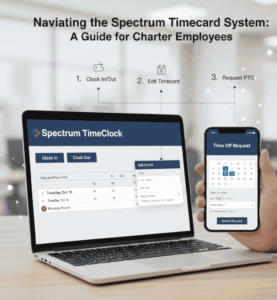
Navigating the Spectrum Timecard System: A Guide for Charter Employees Adp paycheck Salary calculator In the fast-paced world of telecommunications, where technicians climb poles, customer

ADP Payroll Solutions: Finding the Right Fit for Your Business Adp paycheck Salary calculator Payroll management is one of the most critical functions in any

What is a 9/80 Work Schedule? The Complete guide Adp paycheck Salary calculator Ready to Own? Secure Your Home with Dortgage Contact Us The 9/80

How Does Profit Sharing Work? A Deep Dive into Profit Sharing Plans (PSPs) Adp paycheck Salary calculator Ready to Own? Secure Your Home with Dortgage
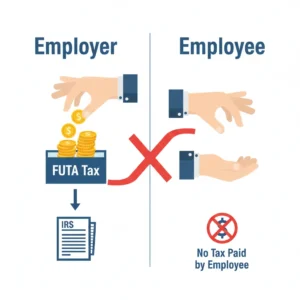
What is FUTA? Understanding the Federal Unemployment Tax Act Adp paycheck Salary calculator Ready to Own? Secure Your Home with Dortgage Contact Us For business